
Industry News
Curation by industry experts
Hot Articles
Popular Tags
Where transmission efficiency losses usually begin
Transmission efficiency losses rarely begin with a breakdown. They usually start as small deviations that escape daily attention.
A pulley shifts slightly. Lubrication ages. Belt tension drifts. A seal starts leaking microscopically. Each issue seems minor, yet each steals energy.
Understanding these weak points is central to mechanical transmission efficiency optimization techniques. Early correction improves reliability, lowers energy waste, and extends component life.
Across conveyors, mixers, pumps, compressors, reducers, and automated lines, hidden loss patterns are surprisingly similar. The challenge is noticing them before they compound.
This guide answers the most searched practical questions about where losses begin, how to identify them, and which actions deliver measurable efficiency gains.
What does transmission efficiency loss actually mean in daily operation?
Transmission efficiency loss means input power is not fully converted into useful output motion. Some energy becomes heat, vibration, noise, or friction.
In real systems, losses appear in belts, chains, gears, bearings, couplings, seals, shafts, and lubrication films. They also emerge from poor installation and unstable loads.
Mechanical transmission efficiency optimization techniques focus on reducing avoidable friction and restoring stable power flow through every contact point.
A healthy system does not only consume less power. It also runs cooler, starts more smoothly, and holds performance longer between maintenance intervals.
When efficiency declines, the first signs are often indirect. Operators may notice higher temperature, changing sound, slower response, or increased motor load.
- Rising energy consumption without production gain
- Localized heating near bearings, seals, or reducers
- Vibration growth after alignment or component replacement
- Premature wear particles in lubricant samples
- Frequent belt retensioning or chain adjustment
These symptoms matter because they reveal system resistance. Efficiency loss is not only a maintenance issue. It is an operating cost issue.
Where do transmission efficiency losses usually begin first?
The earliest losses usually begin at interfaces. Wherever motion transfers from one component to another, precision and lubrication become decisive.
Misalignment is one of the most common starting points. Even slight angular or parallel offset increases side loading and creates extra friction.
Belt and chain systems also lose efficiency early through tension drift. Too loose causes slip. Too tight overloads bearings and shafts.
Lubrication failure is another major origin. Wrong viscosity, contamination, oxidation, or inadequate replenishment weakens the protective film between surfaces.
Seal wear is often underestimated. A damaged seal allows lubricant escape and contaminant entry, accelerating friction growth across the whole transmission path.
Mechanical transmission efficiency optimization techniques begin by checking these hidden starting points before replacing larger assemblies.
Typical early-loss sources
- Coupling misalignment after installation or thermal movement
- Improper belt tracking on pulleys
- Chain elongation and inconsistent lubrication coverage
- Bearing preload errors or contamination
- Gear mesh issues caused by backlash or poor contact pattern
- Seal lip wear and micro-leakage
In heavy-duty environments, dust, moisture, shock loads, and temperature cycling accelerate these small defects into persistent power losses.
How can hidden efficiency losses be identified before failure occurs?
Early identification depends on condition signals, not visible damage alone. Small losses are easier to detect through trends than through one-time inspections.
Temperature trending is simple and effective. A gradual increase around housings, bearings, or gearboxes often indicates growing friction.
Vibration analysis helps identify imbalance, looseness, misalignment, and bearing distress. It also reveals if energy loss is mechanical rather than electrical.
Lubricant analysis is especially valuable for reducers and enclosed gear systems. Wear metals, viscosity shifts, and contamination tell a detailed efficiency story.
Power draw monitoring is another practical tool. If load demand stays constant but current rises, transmission resistance may be increasing.
Mechanical transmission efficiency optimization techniques work best when inspection intervals match duty severity and environmental exposure.
Useful monitoring methods
- Laser alignment checks after installation and major maintenance
- Infrared temperature surveys on rotating equipment
- Routine belt tension and chain elongation measurements
- Oil sampling for particles, water, and viscosity change
- Ultrasound for friction, leak, and bearing condition screening
The key is consistency. Baseline data turns small deviations into actionable findings before they become expensive outages.
Which mechanical transmission efficiency optimization techniques deliver the fastest results?
The fastest gains usually come from correcting setup issues rather than buying new equipment. Small adjustments can quickly reduce wasted power.
Precision alignment is often the first high-impact step. Proper shaft and pulley alignment reduces friction, heat, and uneven loading.
Lubrication optimization is another rapid improvement. Matching lubricant type, viscosity, quantity, and interval to operating conditions restores protective film strength.
Correct belt tensioning improves torque transfer immediately. The same principle applies to chain systems using proper slack and lubrication control.
Seal upgrades can also reduce losses. Better sealing protects lubricant cleanliness and prevents efficiency decline caused by contamination.
In gear drives, checking contact pattern, backlash, and lubrication path often reveals practical optimization opportunities without major redesign.
High-return actions
- Realign shafts, pulleys, and couplings with calibrated tools
- Replace degraded lubricant and eliminate contamination sources
- Reset belt tension to specification and verify tracking
- Inspect seals and breathers to stop lubricant loss
- Review bearing fit, preload, and mounting condition
These mechanical transmission efficiency optimization techniques support both energy savings and reliability, especially in continuous-duty industrial assets.
What common mistakes make efficiency optimization less effective?
A common mistake is treating symptoms without confirming root cause. Replacing a belt repeatedly will not solve pulley misalignment or bearing drag.
Another mistake is over-lubrication. Excess lubricant can increase churning losses, raise temperature, and damage seals.
Mixing incompatible lubricants creates hidden chemical and viscosity problems. That weakens film performance and increases wear risk.
Ignoring foundation looseness is also costly. A stable transmission cannot exist on an unstable base, even with high-quality components.
Some systems are optimized once, then left unchecked. Yet thermal growth, load variation, and environmental contamination continuously change operating conditions.
Mechanical transmission efficiency optimization techniques only remain effective when paired with repeatable inspection and feedback loops.
How should facilities prioritize improvement efforts by cost, risk, and operating impact?
Start with assets that combine high runtime, high load, and high energy use. Small efficiency gains there often create the fastest payback.
Then prioritize systems showing repeated heat, vibration, leakage, or tension instability. These are the clearest signs of hidden mechanical loss.
Low-cost actions should come first. Alignment, lubrication review, tension correction, and seal inspection usually require less capital than full replacement.
Capital upgrades become more attractive when repeated maintenance cannot stabilize performance, or when old designs inherently waste energy.
The following table helps organize decisions around mechanical transmission efficiency optimization techniques.
This stepwise approach keeps optimization practical and measurable, especially in mixed industrial environments with varied equipment age and duty cycles.
What does a sustainable optimization plan look like?
A sustainable plan combines baseline measurement, inspection frequency, corrective thresholds, and documented improvement results.
It should connect maintenance data with energy observations. Efficiency and reliability improve fastest when those two views are not separated.
For many sites, the most effective mechanical transmission efficiency optimization techniques are not dramatic. They are disciplined and repeatable.
Use a simple cycle: inspect, trend, correct, verify, and standardize. That turns isolated fixes into durable operating practice.
GPT-Matrix continues to track the material, lubrication, sealing, and motion-control developments shaping more efficient industrial transmission systems worldwide.
Where transmission efficiency losses usually begin is also where savings usually begin. Start with alignment, lubrication, tension, and sealing, then build from measured evidence.
Review critical assets, capture baseline performance, and apply mechanical transmission efficiency optimization techniques systematically to achieve steadier, lower-loss operation.
Recommended News
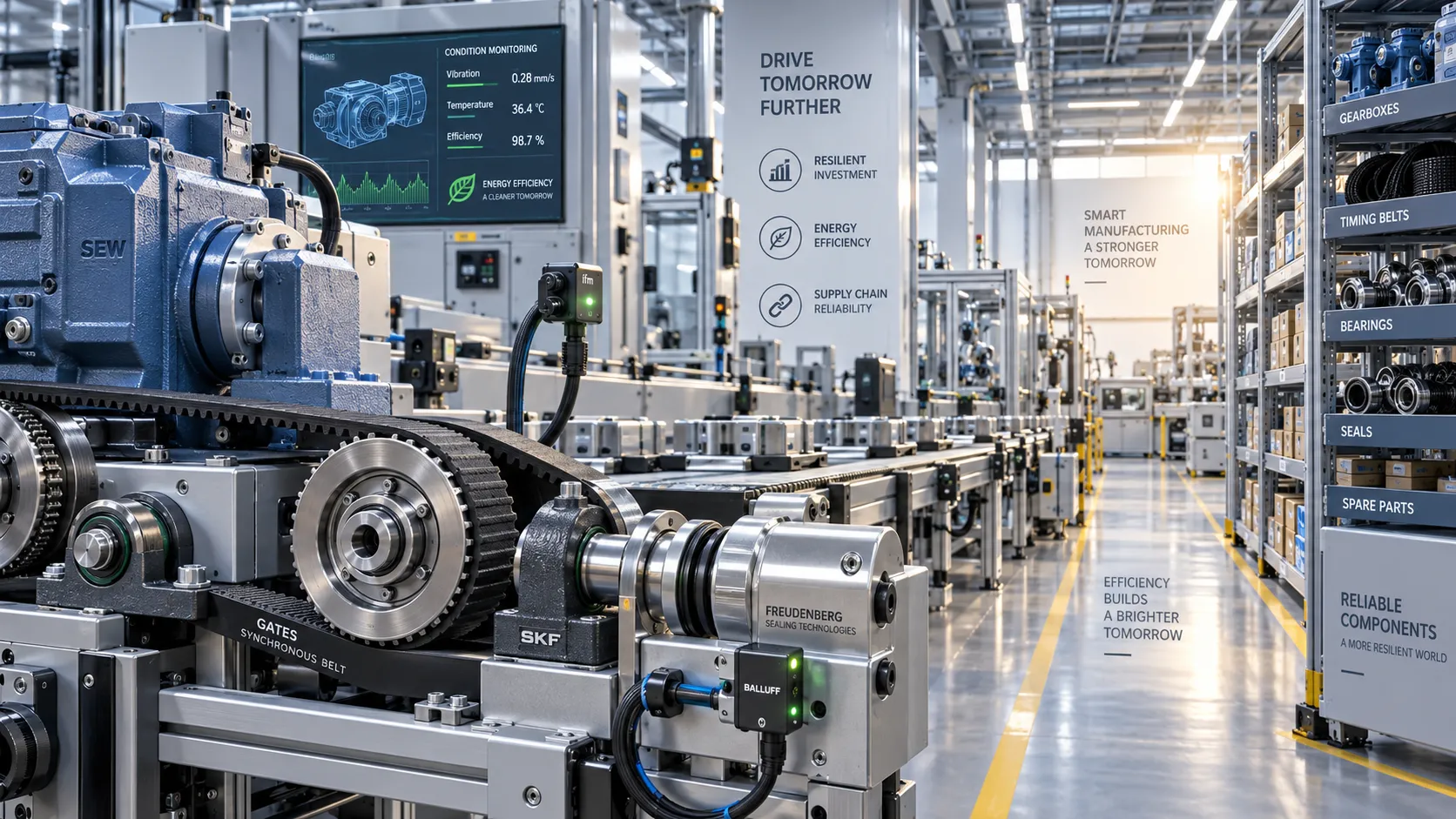
Industrial Economy Trends Shaping Capital Investment and Supply Chain Risk in 2026
Industrial economy trends for 2026 reveal how resilient capital investments, energy efficiency, and supply-chain strategies can protect uptime and strengthen returns.
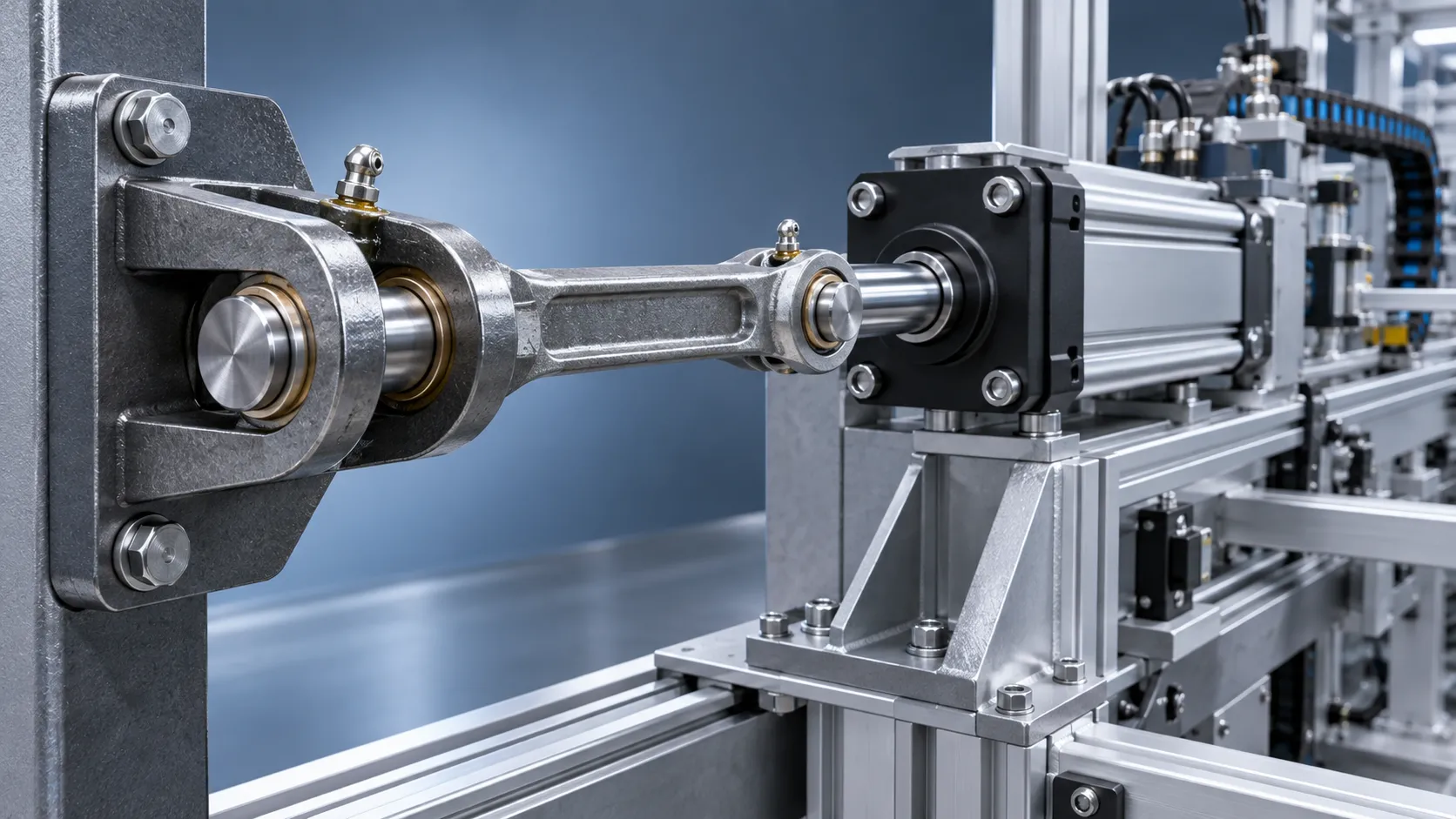
Mechanical Linkage Design: How to Balance Load Capacity, Motion Accuracy, and Wear
Mechanical linkage design guide: balance load capacity, motion accuracy, and wear with practical insights on geometry, joints, tolerances, lubrication, and service life.

How Precision Automated Production Improves Quality Control in High-Volume Assembly
Precision automated production strengthens quality control in high-volume assembly with real-time verification, traceability, and safer defect containment.
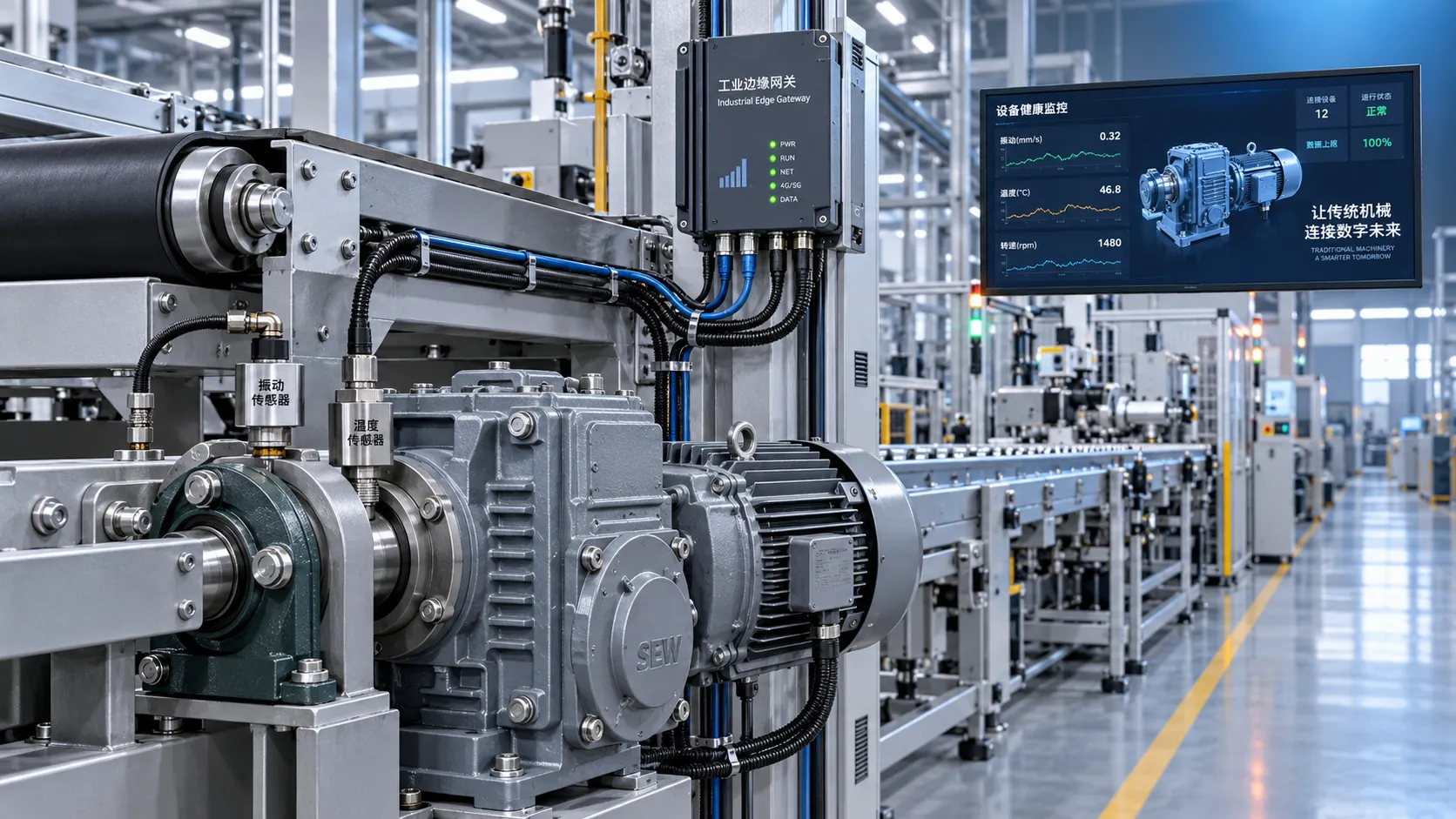
Industry 4.0 Integration: A Roadmap for Connecting Legacy Machines and Data
Industry 4.0 integration roadmap for connecting legacy machines, improving data visibility, reducing downtime, and scaling secure, measurable operational performance.

Servo Drive Comparison: Selecting Motion Control for Speed, Torque, and Load
Technical product comparison servo drives: evaluate speed, torque, inertia, safety, and control integration to select a reliable motion system with proven performance margins.

Industrial Automation Technology: How to Prioritize Upgrades by ROI and Downtime Risk
Industrial automation technology upgrades: learn to rank projects by ROI, bottleneck exposure, and downtime risk to reduce losses and make smarter capital decisions.

Selecting Low-Maintenance Chain Components for Dusty, High-Load Conveyors
Low maintenance chain components for dusty, high-load conveyors: compare seals, lubrication, materials, sprockets, and load capacity to reduce wear and downtime.

Selecting Smart Transmission Modules for Automated Lines: Control, Load, and Safety
Smart transmission modules for automated lines: evaluate control compatibility, real load demands, safety boundaries, and predictive maintenance value for reliable performance.

How to Assess Automated Packaging Production for High-Mix Manufacturing Lines
Automated production for packaging: assess changeovers, flexibility, controls, reliability, and lifecycle cost to build high-mix lines that deliver stable output.