
Industry News
Curation by industry experts
Hot Articles
Popular Tags
How to Compare Motion Control Component Suppliers Fairly
Choosing among motion control components suppliers can be challenging when specifications, pricing, lead times, and service claims vary widely. For business evaluators, a fair comparison requires more than checking catalogs—it means assessing technical consistency, supply reliability, lifecycle cost, and long-term support. This guide outlines a practical framework to help you compare suppliers objectively and make procurement decisions that reduce risk and improve operational value.
1. Start with the same technical baseline
A fair comparison begins by forcing every motion control components supplier to quote against the same operating conditions. If one supplier prices a servo coupling for light-duty use and another sizes it for 24/7 duty cycles, the result is not a comparison—it is a mismatch. Define torque, speed, backlash tolerance, operating temperature, duty cycle, and mounting constraints before asking for offers.
For buyers in automation, packaging, machine tools, and heavy equipment, even small specification differences can change failure risk and total cost. A component that looks cheaper on paper may require more frequent replacement, tighter alignment, or additional maintenance checks every 3 to 6 months. That is why a consistent technical brief is the first control point.
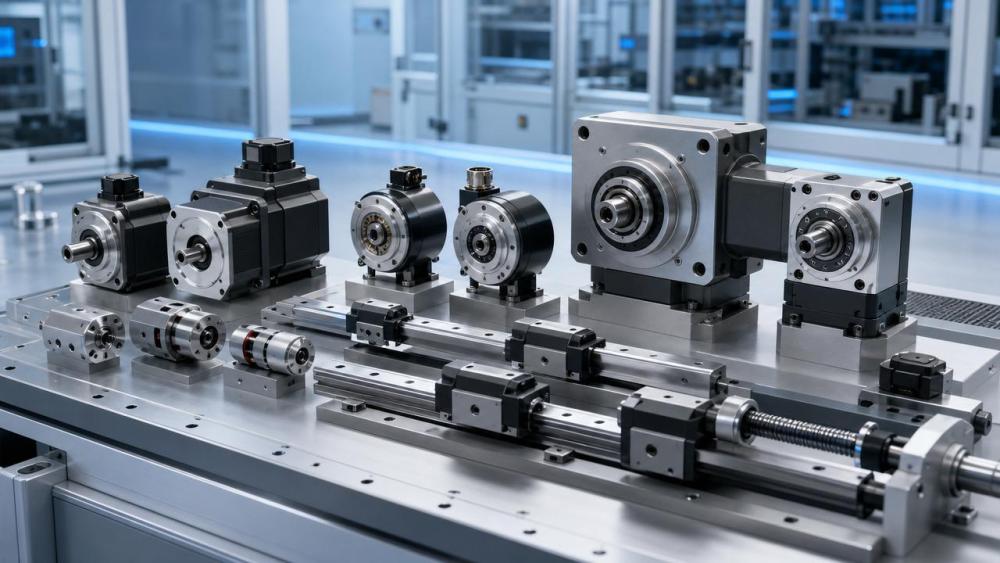
Key specification fields to standardize
Use a single request sheet and require suppliers to fill in the same fields. The goal is to compare like with like, not preferred marketing language. A good template should capture application load, precision requirement, environmental exposure, expected service life, and any interface limitations.
The main takeaway is simple: suppliers that cannot quote against a clear baseline should not be ranked alongside those that can. In B2B procurement, clarity at the input stage often prevents 30% to 50% of downstream comparison errors.
Questions to ask before comparing offers
- Can the component handle the full duty cycle, not just short-term peak loads?
- What tolerance stack-up is assumed in the supplier’s calculation?
- Is the quoted life based on 8 hours per day, or continuous operation?
- Which accessories, adapters, or lubrication items are included in the quote?
2. Compare total value, not just unit price
Unit price is only one line in the procurement equation. For motion control components suppliers, the real comparison includes setup time, maintenance frequency, replacement lead time, and the impact of unplanned downtime. A component that costs 12% less but fails twice as often can quickly become the most expensive option.
Business evaluators should estimate lifecycle cost over a 12- to 36-month horizon. Include installation labor, calibration effort, spare parts inventory, shipping urgency, and lost production hours. For high-throughput lines, even a 2-hour interruption can outweigh a small purchase discount.
When suppliers present different price structures, normalize them into a common model: purchase cost, installation cost, annual maintenance cost, and risk cost. This approach is especially useful when comparing linear guides, couplings, gear reducers, encoders, and other motion control components used in automated production systems.
A practical comparison model
Score each supplier on 4 dimensions: price, performance, delivery, and service. Assign weights based on business impact. For example, if line stoppage is costly, delivery reliability may deserve 35% of the total score, while price receives only 20%.
- Normalize quotations into the same specification scope.
- Estimate total cost over the expected service period.
- Check lead time stability for both standard and urgent orders.
- Review after-sales support, warranty terms, and escalation speed.
3. Test supply reliability and service capability
Reliable motion control components suppliers do more than ship parts. They keep promises on lead time, maintain stable quality across batches, and respond quickly when a plant needs a replacement in 48 hours rather than 2 weeks. For business evaluators, service behavior is a core part of supplier quality.
Ask for evidence of on-time delivery rates, batch traceability, return handling, and technical response times. If a supplier cannot explain how it manages shortages, quality deviations, or alternate sourcing, that weakness can become operational risk later. In industrial purchasing, a missed delivery window can interrupt assembly, testing, or export commitments.
Service factors worth checking
- Standard lead time and expedited lead time
- Minimum order quantity and split-shipment policy
- Complaint response time, ideally within 24 to 72 hours
- Replacement stock availability for critical items
If you source motion control components for a multi-site operation, compare service coverage by region. A supplier with a strong catalog but weak local support may create delays in commissioning, documentation, and warranty handling. For global buyers, time zone alignment and language clarity also matter.
The best suppliers make their service process visible before a purchase order is placed. That transparency is often a stronger indicator of long-term reliability than a polished brochure or aggressive pricing.
4. Reduce procurement risk with a structured evaluation process
A structured process helps business evaluators avoid emotional decisions and hidden trade-offs. For motion control components suppliers, use a 5-step workflow: define requirements, shortlist vendors, request comparable quotations, validate samples or drawings, and confirm commercial terms. This prevents incomplete comparisons and reduces rework.
Risk control should include quality documents, packaging standards, traceability, and warranty clauses. If a component sits inside a critical drive system, require a clear acceptance method before mass purchase. Even simple parts benefit from inspection checkpoints for dimensions, surface finish, and compatibility.
Suggested 5-step procurement flow
- Write a unified technical brief with operating data and usage conditions.
- Invite 3 to 5 suppliers to quote against the same baseline.
- Compare commercial terms, not just the unit price.
- Verify samples, documentation, and delivery commitments.
- Lock in service expectations, escalation paths, and reorder rules.
For recurring purchases, ask for performance review after the first 3 shipments. Track defect rate, delivery variance, and support responsiveness. This creates a factual basis for supplier consolidation or expansion in the next sourcing cycle.
Common mistakes to avoid
- Comparing quotes without confirming identical specifications
- Ignoring replacement lead time for critical spares
- Using price as the only decision criterion
- Skipping documentation review for packaging, warranty, and traceability
If your buying team works across plants or countries, build a shared supplier scorecard. It should include 6 items at minimum: technical fit, price, lead time, service, quality consistency, and commercial flexibility. A shared framework makes supplier review faster and more defendable.
5. Make the final decision with long-term operational value in mind
The final choice should reflect operational value, not short-term savings alone. Strong motion control components suppliers help stabilize throughput, reduce maintenance effort, and support future design changes. For business evaluators, that means selecting partners who can support both current volume and next-stage expansion.
A practical rule is to favor the supplier that delivers the best balance across 3 variables: reliability, total cost, and support quality. If two suppliers are close, choose the one with clearer documentation, faster escalation, and better batch consistency. Those traits often matter more after the purchase order is signed.
For procurement teams, the best outcome is not just choosing a supplier; it is building a repeatable evaluation method. With that method, motion control components suppliers can be judged fairly, risks can be reduced, and sourcing decisions become easier to defend across finance, engineering, and operations.
If you are reviewing current vendors or building a new shortlist, use this framework to compare offers on a common basis. For tailored sourcing guidance, technical intelligence, or supplier comparison support, contact GPT-Matrix to discuss a practical solution for your next procurement cycle.
Recommended News
How to Qualify an Industrial Component Supplier for Critical Production Parts
Industrial component supplier qualification guide: reduce downtime risk, verify quality, traceability, change control, and total cost for critical production parts.
How to Evaluate an Extreme-Condition System Supplier for High-Risk Operations
Extreme condition system supplier evaluation guide: compare engineering evidence, material control, testing, and lifecycle support to reduce high-risk operational failures.
Motion Control Reference Projects: How to Adapt Proven Solutions to Your Machine
Industrial solution references motion control guide: learn how to adapt proven servo architectures, validate machine-specific risks, and accelerate reliable commissioning.
How to Evaluate an Industrial Motion Control Solutions Supplier for Automation Projects
Evaluate an industrial motion control solutions supplier with confidence. Compare sizing, integration, quality, support, and lifecycle value for reliable automation projects.

Key Semiconductor Industry Components and Their Roles in Chip Manufacturing
Semiconductor industry components explained: explore wafers, lithography, deposition, etching, packaging, and the critical roles that drive chip quality and yield.
Mechanical Component Selection: Key Criteria for Load, Speed, Environment, and Service Life
Mechanical component selection made practical: evaluate load, speed, environment, lubrication, and service life to improve reliability, reduce downtime, and control lifecycle costs.
What to Request in Component Specification Resources Before Choosing a Supplier
Industrial component specification resources supplier guide: request drawings, material data, ratings, validation, and change control to choose reliable suppliers and reduce lifecycle risk.
How to Specify Multi-Axis Motion Control for High-Precision Automated Machines
Master multi axis motion control for high-precision automation—optimize synchronization, feedback, mechanics, safety, and lifecycle reliability.
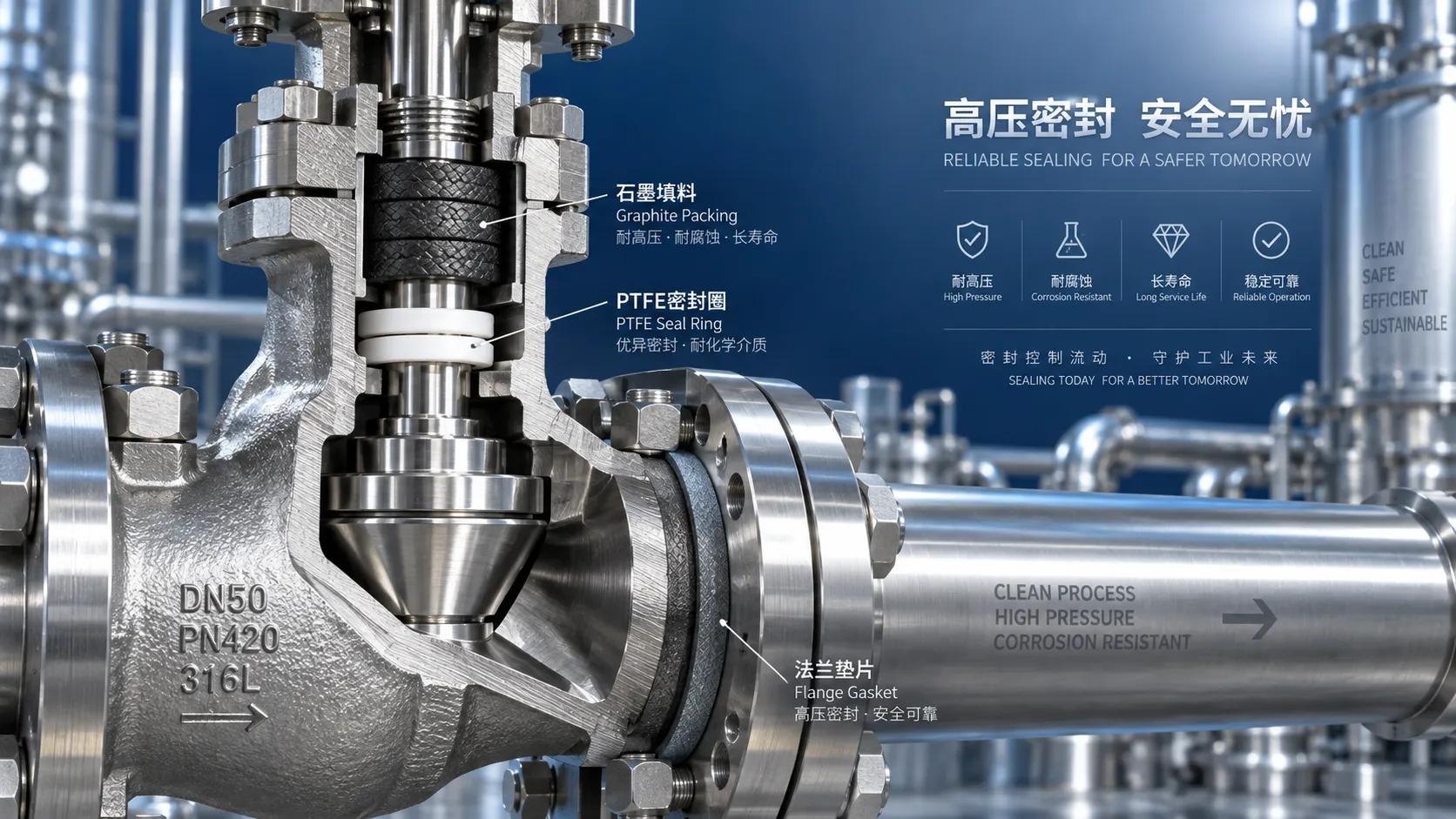
Selecting Valve Sealing Solutions for High-Pressure and Corrosive Service
Industrial sealing solutions for valves: learn how to select reliable systems for high-pressure, corrosive service, control fugitive emissions, and reduce lifecycle leakage risks.